I had a teacher years ago—a brilliant, soulful teacher of Ancient Greek, the late Jack Collins—whose maxim was “To row is human; to sail, divine.” Of course it was a play on the old proverb “To err is human; to forgive, divine.” What he meant was that there’s a place for discipline, and it’s often necessary, especially near the beginning of a project. But after discipline has done its work, after it’s gotten us launched, rowing our boat away from land, pushing on the oars, there comes a time when discipline is no longer needed, and the serious joy of the work takes its place.
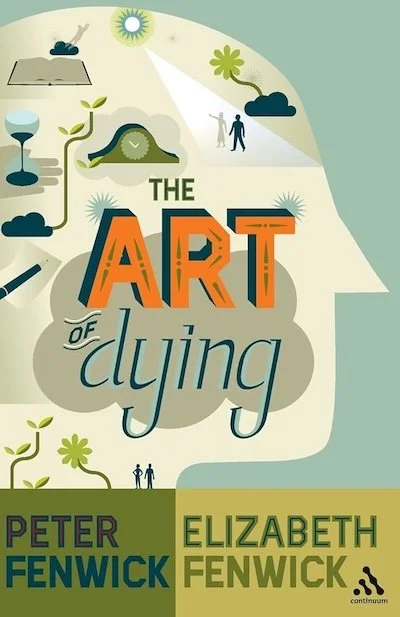
I recently read a strange book by the British writer Peter Fenwick and his wife Elizabeth, called The Art of Dying. It’s a collection of anecdotal evidence about people having deathbed visionary experiences in which their dead relatives come to collect them. It also describes incidents in which caregivers or family members see odd phenomena at the time of death, including strange behavior in animals. I found the book both fascinating and comforting.
When you start to love yourself, it will soon become clear that the love that you have inside—which is yours to give, when and where you want to—is very high-quality, and it’s going to get even more valuable as you grow. It’s the good stuff. It is worth a lot. You can be a source of the good stuff, giving as well as receiving. When you’re accustomed to feeling like a vacant cave of darkness, a black hole from which not even light can escape, it’s strange to think you might turn into a star that radiates light instead. But it happens.
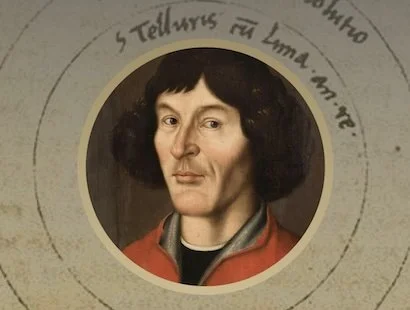
All of the “significance” or “meaning” to which we have any access is centered here, on the only green world we know. “Earth’s the place for love,” wrote Robert Frost, “I don’t know where it’s likely to go better.” When Socrates reported that the Delphic Oracle had said “No human being is wiser than Socrates,” it was clear that Apollo meant human wisdom is worthless compared to the wisdom of the Gods. To get exuberant about the “vastness of human ignorance,” as Bion and others have done so often, is an expression of omniscience which pretends to have exited from that state and looked back on it with fond pity—as if the whole life of mankind were a provincial illusion, except for this very humble bit of it where a thinker notices the surrounding universe. Experience says that our “merely” human action creates real relationships, real suffering and losses, real nurturance, connection and love, creativity and damage, joy and pain. Of course the scale of our actions is a match for our own size and longevity, not those of a galaxy or a mouse.
Whatever your age, you are also all the ages you’ve been before. Part of your psyche is an infant, because past selves remain as parts of an increasingly complex self-system. Younger parts of self, with unhealed wounds and unmet needs, can interfere with adult life, until they get the necessary loving care from the most adult parts of self. Now, without an awareness that the self has parts, we are likely to feel crazy the moment our feelings do not agree with one another. I want to eat the cake, but I also want to be in a caloric deficit. I want to keep playing in the snow, but I also want to go inside and warm up. Knowing it's impossible to do both, I might well feel crazy whenever a pair of incompatible desires assails me.
Compliance and defiance typically have been the poles between which the patient has been running back and forth for years, inside a family system which is stuck in that pattern. His compliance seems to be movement forward into adulthood, so long as most of what he complies with happens to be good advice, and reasonable rules, from exasperated elders who may well love him. But compliance is never really as good as it looks, because it's not autonomous, so it is not sustainable; it builds resentment that comes out sooner or later. His defiance appears to be much worse, of course, because it's often full of hostility, self-destructive, anti-social, risky, and debilitating. Part of the reason this pattern is so terribly stable and hard to break up, is that the family's response to the young addict's defiance is usually a call for a return to compliance, this time a new-and-improved compliance that will last. That never works, because even if he does produce a good lengthy chunk of compliance, it's still mere compliance. The solution is, in most such cases, to bring in a therapist whose client is not the family, but the patient himself. That way, the patient can continue doing the only two things he knows how to do, but in a whole new way which will permit him to learn new skills: he defies the family, and (for the time being) complies with the therapist in a private, collaborative search for what the patient really wants from life.
You don’t need a reason to love yourself. You don’t need an excuse to love yourself. You don’t need permission to love yourself. You don’t need to meet criteria to love yourself. It isn't achieved by striving, because it is the necessary baseline above which all striving occurs. It's achieved by letting go: you are already a living organism on this planet; therefore, loving-self-acceptance is already within you somewhere. Shift it into the center.
Unhappy kids will try damn near anything they can think of as they strive to get what they need from the people who are responsible for their very existence. When little or none of it works, the result is despair. But because the despair is still mixed with unrealistic and relentless hope, they cannot avail themselves of the one good thing that despair has to offer: release from the exhausting misery of relentless hope. Letting go of relentless, unrealistic hopes can liberate you into genuine forms of problem-solving in the real world—with results that come from you, not from idealized parents whop never appear. You give up empty hopes in exchange for full experiences.
Those who are hypnotized by the grandiose rewards of success tend to berate themselves for not having it yet. When and if they do achieve it, they tend to be the people who forget who they are and get into trouble (addiction, etc.). Those who remember the art and their experience of it—both the acting and the camaraderie of being in a troupe or a cast—tend to cope better with lack of outward success (since the aspect that really matters to them is the one they already do have), and, if things go well, they can tolerate success without losing hold of themselves. Remember: it’s a gift. Humility and gratitude can keep you safe, even in the glare of fame or the darkness of obscurity.